
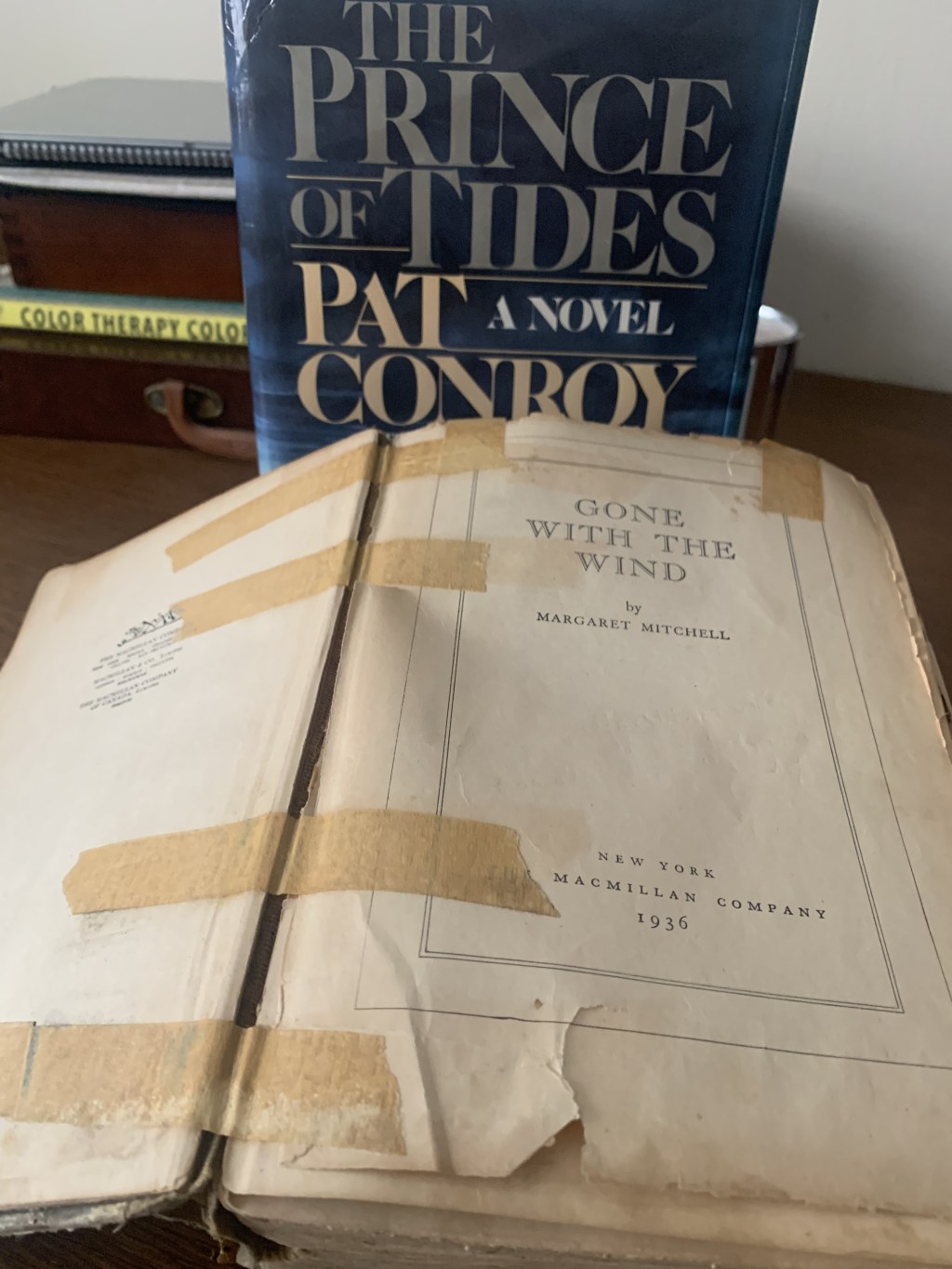
Books are a part of my earliest memories: my mother reading to me at night and on Saturday mornings. From Peter Rabbit to Bible stories, books held magic. When I could read for myself, a book was a reliable companion. I was Jo eating an apple while reading a book in a tree, and later writing her own manuscript in a garret.
I continued the tradition with my children – countless readings of Good Night Moon, The Cat in the Hat, The Velveteen Rabbit. They both became writers.
I have owned, packed up, and given away hundreds of books through the years and yet haven’t scratched the surface of all the printed words in the world’s library. I’m overwhelmed going into any Barnes & Noble at the volume of titles, especially knowing the difficulty of actually writing a book, the near impossibility of getting one published, and how hard it is to make any profit.
Yet the love of books, seeing words on paper come alive into interesting characters, amazing stories, and life lessons never leaves me. Books will always be there for me.
If I had to pick two favorites, they would be Gone with the Wind (Margaret Mitchell) and Prince of Tides (Pat Conroy). I still have my mother’s copy of Gone with the Wind from 1936. I have read it so many times the pages have fallen out. Scarlett O’Hara was a part of the web of my being. I lived the romanticized glory of the Old South and the horrors of war and reconstruction.
Set in the South Carolina Lowcountry, Prince of Tides shows a more contemporary South and delves into complicated family and inner relationships. I can smell pluff mud in the pages and relate to Conroy’s cryptic opening line, “Geography is my wound.” Yet I have never wanted to live anywhere else.
I start and put down many books. But a new one, The Peach Seed, held my interest from beginning to end. A first novel of Anita Gail Jones, The Peach Seed, also set in the South (rural Georgia), is about a present-day Black family with a multi-generational history. Despite obvious differences, I related to the universal problems of family, relationships, and imperfections. It is beautifully written, vivid with images and alive with dialect.
Since college I have vacillated between English (literature) and Social Work (“helping people”). The conflict has often been hard for me, and I have tried to resolve it by writing about personal experiences and universal themes that might help others. In a memorable conversation with my English professor (1972?) when I changed my major from Sociology to English, he graveled out: “Well, Garrison, Shakespeare has the answers to all life’s problems.”
Not wrong, Dr. Stewart, not wrong.
 Our Aging Selves
Leave a comment